Water extraction vs water damage mitigation: which do you need
Water extraction pulls standing water out fast. Mitigation stops the damage from spreading. Here's how to tell which one your Studio City home needs right now.
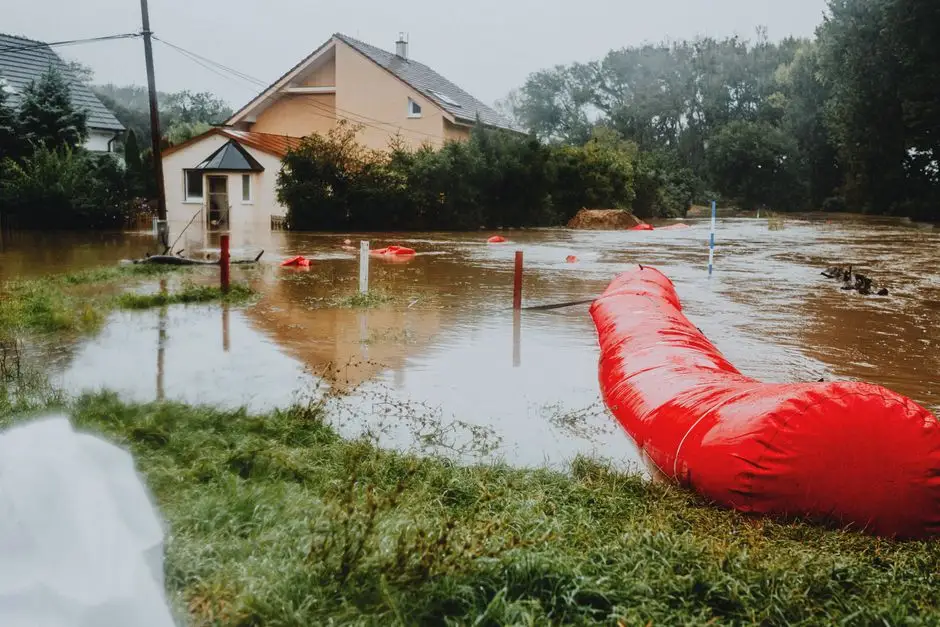
Water extraction is the physical removal of standing water from your floors, carpets, and cavities using pumps and truck-mounted vacuums. Water damage mitigation is everything that happens after the water is gone - drying, dehumidifying, sanitizing, and sealing materials so mold and structural damage never take hold. If there is still water pooled on the floor, you need extraction first. If the water is gone but walls, baseboards, or subfloor are still wet, you need mitigation.
Most Studio City homeowners who call us after a burst pipe or a backed-up drain actually need both, in that order, and the window to start is short. This post breaks down what each service does, how to tell which one your situation calls for, and what 2026 pricing looks like in the 91604 and 91602 zips.
Water extraction vs water damage mitigation: the short answer
Water extraction is a service that removes standing water from a structure using pumps, weighted extraction wands, and truck-mounted vacuum units. Water damage mitigation is a service that stabilizes the building after the water is removed - drying, dehumidifying, antimicrobial treatment, and moisture monitoring until the structure is back to a safe reading.
Think of it this way: extraction is the rescue, mitigation is the recovery. You cannot skip extraction and go straight to mitigation because wet carpet and standing water will keep re-wetting the air no matter how many dehumidifiers you run. And you cannot stop at extraction, because the water you can see is only about 20% of the water that actually entered the building. The rest is in the pad, the drywall, the subfloor, and the framing.
Here is the split in plain terms:
- Extraction: pumps, vacuums, weighted wands, subfloor drying mats. Removes visible water. Usually 1-4 hours on a typical residential job.
- Mitigation: air movers, LGR dehumidifiers, moisture meters, thermal imaging, antimicrobial spray. Removes hidden moisture. Usually 3-5 days of drying.
If you are looking at an inch of water in a finished basement right now, you need water extraction in Studio City, California today, not tomorrow. Every hour the water sits, the drying time roughly doubles.
What water extraction actually does
Extraction is the heavy-lifting phase. Our technicians arrive with truck-mounted extraction units that pull water out of carpet at rates a wet/dry shop vac cannot touch - we are talking 10 to 15 gallons per minute on a standard 2-inch hose. On a 1,200-square-foot flooded area, that is the difference between a two-hour job and a two-day job.
What we do during extraction:
- Shut off the water source or confirm it is already off.
- Pull standing water with a submersible pump if depth exceeds half an inch.
- Run weighted extraction wands over carpet and pad to squeeze out trapped water.
- Use a moisture meter and thermal camera to map where the water actually traveled.
- Remove carpet and pad if the water was Category 2 or 3 (contaminated).
Extraction alone will not dry your home. It gets you to the starting line. We see this constantly in Water Damage Restoration in Studio City Hills, where hillside homes have split-level floors and water from a single failed supply line can run down into two or three rooms before anyone notices.
One more thing about extraction: it is not just for floods. A toilet overflow, a washing machine hose failure, or a slab leak that finally surfaced under the laminate all start with extraction. If the water is contaminated - sewage, gray water, or standing more than 48 hours - we treat it as a biohazard and follow different protocols. That is where sewage cleanup in Studio City, California comes in, and it is a different job than a clean-water pipe burst.
What water damage mitigation actually does
Mitigation is the part that determines whether you are dealing with a dried-out room in four days or a mold remediation project in three weeks. It is also the part most homeowners underestimate, because the floor looks dry long before the structure is dry.
During mitigation we:
- Set air movers to create a vortex across wet surfaces - typically 1 air mover per 10-16 linear feet of wall.
- Place LGR dehumidifiers to pull moisture out of the air so wet materials can keep releasing it.
- Drill small weep holes in baseboards and drywall where water is trapped behind the wall.
- Apply antimicrobial treatment to framing and subfloor to slow microbial growth.
- Take daily moisture readings and log them until materials hit dry standard.
Dry standard for most building materials in Southern California is 8-12% moisture content on a pin meter, or within 2-3 points of an unaffected reference area in the same home. We do not pack up equipment until we hit that number. If we leave early, you get mold. It is that simple.
Mitigation is also where we catch the problems extraction cannot see. A pinhole slab leak under a tile floor can soak a 200-square-foot area without ever showing water on the surface. That is why we bring thermal imaging on every job - the camera shows the wet zone as a cold spot before your feet ever feel it. If you have noticed a warm spot on the floor or an unexplained spike in your water bill, that is worth a call for water leak restoration in Studio City, California before the damage spreads under the whole room.
How to tell which one your situation calls for
Use this decision path. It is the same one our dispatchers use when you call in.
You need extraction if:
- There is visible standing water anywhere on the floor.
- Carpet squishes when you step on it.
- Water is still actively running or dripping.
- It has been less than 24 hours since the water appeared.
You need mitigation if:
- The water is gone but drywall, baseboards, or cabinets still feel cool or damp.
- You smell that musty, wet-cardboard odor.
- Paint is bubbling or wallpaper is peeling.
- It has been more than 24 hours since the water event.
You need both if: the water was more than a gallon, came from a supply line, or sat for more than a couple of hours. That is roughly 90% of the calls we run in Studio City.
If you are not sure which one applies, call us and describe what you see. We can usually tell you over the phone whether you are looking at a two-hour extraction or a five-day mitigation project. And if the water came in through the ceiling - a common problem in two-story homes with upstairs bathrooms - you are almost always looking at both, plus a moisture check in the ceiling cavity. That is a ceiling water damage repair in Studio City, California job that starts with extraction and ends with drywall repair.
Why Studio City homes flood differently than the rest of LA
Studio City sits in a bowl. The hills on three sides push stormwater down toward the flat streets, and the older housing stock - much of it built between 1935 and 1965 - was plumbed with galvanized steel supply lines that are now 60 to 90 years old. Those lines corrode from the inside out and fail without warning.
Three patterns we see over and over:
- Hillside slab and foundation leaks in Studio City Hills and Fryman Canyon, where expansive soil moves with the wet-dry cycle and cracks the slab around the drain lines.
- Root intrusion in the main line in Laurel Canyon and Woodbridge Park, where mature sycamores and eucalyptus push roots into 4-inch clay sewer laterals. That backs up into the lowest fixture in the house - usually a downstairs toilet or shower.
- Roof and window intrusion during the first big storm of the season, especially in Colfax Meadows and Carpenter Community where original single-pane windows and 30-year-old roof flashing are common.
Our rainy season runs November through March. If you have not had your main line scoped or your roof flashing checked since last winter, do it before the next storm. A $300 inspection beats a $12,000 mitigation every time. We cover the whole area, from Water Damage Restoration in Laurel Canyon down to the flats, and the failure patterns are different in each pocket.
What does water damage mitigation cost in Studio City in 2026?
Typical 2026 pricing in this area breaks down like this:
- Emergency water extraction: $450-$1,200 for a single room, $1,500-$3,500 for a whole floor.
- Water damage mitigation (drying): $1,800-$4,500 for a 3-5 day dry-out with equipment, monitoring, and antimicrobial.
- Extraction + mitigation bundle: $2,500-$6,500 for most residential jobs.
- Mold remediation add-on: $1,500-$6,000+ depending on square footage and containment needs.
Those ranges assume clean water (Category 1) and no reconstruction. Sewage or Category 3 water adds 30-50% because of disposal and disinfection requirements. If drywall and flooring need to be replaced, that is a separate reconstruction line item - we can handle it, but it is not part of the mitigation number.
Most homeowner policies cover sudden and accidental discharge - a burst pipe, a failed water heater, an appliance hose. They typically do not cover gradual leaks you should have caught. That distinction matters, and it is the single biggest reason we document everything with photos and moisture logs from hour one.
Common mistakes we see homeowners make
The most expensive mistake is running a box fan and calling it done. A box fan moves air. It does not remove moisture. Without a dehumidifier pulling water vapor out of the air, you are just circulating damp air through the room and into the rest of the house.
Other mistakes:
- Waiting until morning. Water damage compounds hourly. A pipe that bursts at 11 p.m. and gets extracted at 8 a.m. has already soaked into the subfloor and started microbial growth.
- Pulling up carpet but leaving the pad. The pad holds more water than the carpet. If you keep the pad, you keep the moisture.
- Judging dryness by touch. Drywall can feel dry on the surface while the paper backing and studs behind it are still at 25% moisture. Only a meter tells the truth.
- Not photographing before cleanup. Your adjuster needs the before picture. Once you have hauled wet items to the curb, that evidence is gone.
- Assuming the smell will go away. That musty odor is microbial volatile compounds. It means mold is already growing somewhere you cannot see.
If you smell it and you cannot find the source, do not paint over it. That is a sign you need mold remediation after water damage in Studio City, California, and painting over active mold just feeds it.
When to call a professional
Call us when any of these are true: the water covered more than a few square feet, it came from a supply line or sewage line, it has been sitting more than two hours, or you can smell moisture but cannot see it. Those four conditions cover almost every job that turns into a mold claim.
You can handle a small spill from a knocked-over glass or a leaking plant saucer with towels and a fan. Anything bigger than that, and the math tilts toward calling in equipment you do not own. Our team at Water Damage Restoration Studio City handles extraction and mitigation as one continuous job, so you are not coordinating two contractors and hoping the handoff does not drop the ball.
We also handle the odd ones - toilet overflows, washing machine failures, water heater blowouts, and the water left behind after a kitchen fire gets put out. If you are not sure whether your situation qualifies, call and describe it. We will tell you honestly whether you need us or a mop.
Frequently Asked Questions
Can I just do water extraction myself with a shop vac?
For a spill under 5 square feet, yes. For anything larger, a shop vac pulls surface water but leaves the pad and subfloor saturated. Professional extraction removes 3-5x more water and takes 1-4 hours instead of a full day of bucket work.
How long does water damage mitigation take?
Most residential dry-outs run 3-5 days with equipment running continuously. Category 3 (sewage) jobs can take 7-10 days because of disinfection and material removal. We take daily moisture readings and do not pull equipment until materials hit dry standard.
Does homeowners insurance cover water extraction and mitigation?
Sudden and accidental discharge - burst pipes, failed water heaters, appliance hose failures - is typically covered. Gradual leaks and flooding from outside the home usually are not. We document everything from hour one so your adjuster has what they need.
What is the difference between mitigation and restoration?
Mitigation stops the damage and dries the structure. Restoration rebuilds what was damaged - drywall, flooring, paint, trim. Mitigation is the emergency phase; restoration is the repair phase. Most jobs need both, but they are separate scopes and separate line items.
How fast does mold grow after water damage in Studio City?
Mold can begin colonizing wet drywall and framing in 24-48 hours. In our climate, with indoor humidity often above 60%, that window is on the short end. That is why we start drying equipment the same day we extract.
Get help with Water Damage Restoration in Studio City
Whether you are staring at standing water right now or you are three days out from a leak and starting to smell something, we can tell you which service you need in one phone call. Our team runs extraction and mitigation as a single job across Studio City, from the hills down to the flats.
Call (833) 321-7153 and describe what you are seeing. We will tell you straight whether it is a two-hour extraction or a five-day dry-out - and we will be there with the equipment either way.